

Last Updated: November 9, 2026
Quick Summary
A large girth is one wide enough to need a broad central plate that spreads saddle pressure across the barrel rather than a narrow strap. There is no universal standard, since conformation varies by breed and discipline, so measure from billet to billet with the saddle on and let your horse's reaction at girthing confirm the choice.
- Measure from the lowest point of the billets on one side, under the belly, to the billets on the other side.
- A thick pad can add half an inch to an inch to the required girth length.
- Girth length is the buckle-to-buckle distance; girth size describes how the girth wraps the barrel.
- Buying a wide girth to fix a slipping saddle usually makes the problem worse, since slipping is a saddle-fit issue.
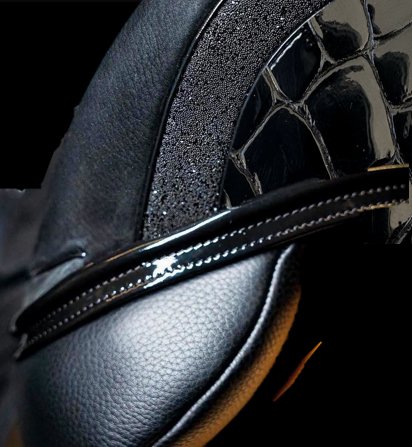
- The large dressage girth is the widest model, with an expanded central plate that shields the belly from stud and shoe impacts.
Table of Contents
- Why Large Girth Sizing Decides Comfort Under Saddle
- How to Measure Girth Correctly Before You Buy
- Girth vs Length Importance: What Actually Affects Performance
- Average Girth Size and What Counts as Large
- MacRider Girth Options Compared: Prices and Design Differences
- Anatomical Shape, Padding and Material Density Explained
- Compatibility, Hygiene and Partner Comfort for Wide Girths
- Book a Saddle and Girth Fitting With MacRider
- Frequently Asked Questions
Why Large Girth Sizing Decides Comfort Under Saddle
A large girth that fits poorly is the quiet cause of most resistance under saddle, and it is the one piece of tack riders replace last. Horses that pin their ears at girthing or shorten their stride over fences are usually reacting to pressure, not attitude. The girth sits across the horse's most sensitive barrel area, where the skin is thin and the muscles move with every breath. Get the size wrong and no amount of saddle fitting fixes it.
Three things go wrong when sizing is off. A girth that is too short pulls the saddle down into the withers. One that is too long bunches the padding and creates friction points at the elbow. And a girth that is wide but not shaped for the horse's conformation presses on the sternum instead of clearing it.
Below, we walk through measuring, sizing, and choosing among our girth models so your horse moves freely and your saddle stays put.
How to Measure Girth Correctly Before You Buy
Measuring girth starts with the saddle on the horse, not on the rack. Tack up as you would to ride, then run a soft tape measure from the lowest point of the saddle's billets on one side, under the belly, and up to the billets on the other side. The number you record is the girth length you need, not the horse's barrel circumference, those are different measurements, and mixing them up is the single most common ordering error.
Follow these steps:
- Have someone hold the horse square on level ground, with all four feet planted and the head straight.
- Place the saddle without a pad first, then add the pad and recheck, a thick pad can add a half inch to an inch to the required girth length.
- Run the tape directly behind the front leg, avoiding the elbow crease, and keep the tape flat against the skin rather than letting it bridge across the sternum.
- Record the measurement in inches at the point where the billets meet, rounding to the nearest inch.
- Repeat twice and average the results; a difference of more than one inch between passes means the horse shifted or the tape slipped.
If you are switching disciplines, measure again rather than assuming your old size carries over.
Watch out: measuring with the horse's belly full after turnout or before exercise can read an inch long, because the barrel expands with hay and water. Measure at the same point in the day you normally ride.
To get the saddle fit right first, our guide on how to measure horse for saddle fit walks through back width, gullet, and seat sizing before you touch a girth.
Girth vs Length Importance: What Actually Affects Performance
Length and girth are not the same measurement, and confusing them is the most common sizing error we see. Girth length is the distance from buckle to buckle along the girth itself. Girth size, in the fitting sense, describes how the girth wraps the barrel. A horse can need a short girth length and still have a large girth circumference.
For jumping, length matters more than most riders realize. A short jumping girth keeps the buckles clear of the elbow and lets the horse bascule without the girth catching on the fold of skin behind the front leg. Our short jumping girth option is built for exactly this distinction, so you can match length to discipline rather than guessing.

What most guides miss is that a longer girth does not automatically mean a looser fit. Elastic ends change how much give the girth has under tension. A long girth with heavy elastic can feel tighter than a shorter one with firm leather ends. Match the elastic to your horse's reaction at girthing, not to the number on the tag.
Average Girth Size and What Counts as Large
There is no universal standard for a "large" girth, because horse conformation varies so widely across breeds and disciplines. What counts as large on a fine-boned Thoroughbred would be average on a warmblood.
A practical way to think about it: girth size is large when the horse's barrel needs a wide central plate to distribute pressure rather than a narrow strap. Wide-barreled horses, those with prominent sternums, and horses in heavy jumping work benefit most from a broad, padded plate. The mechanism is simple, pressure equals force divided by contact area, so a wider plate spreads the same saddle tension over more square inches, reducing pounds per square inch on the sensitive skin behind the elbow and across the sternum.
Jumping horses in heavy work benefit from a wide belly guard regardless of barrel width, because the plate shields the belly from stud and shoe impacts over fences, that is a protection function, not a pressure-distribution one.
Watch out: buying a wide girth to solve a slipping saddle usually makes the problem worse. Slipping is a saddle-fit issue, not a girth-width issue. Address the saddle first, then size the girth to the barrel.
Width also interacts with shape. A wide girth with a flat plate presses evenly but can restrict the shoulder; a wide girth with an anatomical contour clears the elbow while still spreading load. When in doubt, measure the barrel circumference at the girth line, compare it to the ranges above, and let the horse's reaction at girthing be the final check, a horse that pins its ears or shortens its stride is telling you the plate is wrong for its conformation, whatever the tape says.
MacRider Girth Options Compared: Prices and Design Differences
Here is how the girths in this range compare.
Model |
Price |
Width and Shape |
Best For |
|---|---|---|---|
Dressage Girth |
$170.00 |
Anatomical contour, soft padding |
Daily dressage work |
Dressage Girth (Elite) |
$220.00 |
Anatomical contour, upgraded leather |
Competition dressage |
Dressage Girth Big |
$205.00 |
Wide belly guard, anatomical contour |
Jumping and stud protection |
Dressage Girth Big (Elite) |
$205.00 |
Wide belly guard, reinforced plate |
High-performance jumping |
Curved Girth |
$250.00 |
Asymmetrical contour, soft padding |
Horses needing elbow clearance |
Price
The large dressage girth is our widest model, with an expanded central plate that shields the belly from stud and shoe impacts over fences. Riders who want the full specification and sizing range can view the dressage girth big product page directly.

Best for: horses with wide barrels or heavy jumping schedules. Skip if: your horse has a narrow barrel and no history of girth rubs.
Anatomical Shape, Padding and Material Density Explained
Anatomical shape is the difference between a girth that clears the elbow and one that rubs it raw. The contour curves away from the sensitive area behind the front leg, so the horse can move the shoulder without the girth catching.
Padding density matters just as much as shape. Soft, continuous padding distributes pressure across the whole underside instead of concentrating it at the edges. Our curved girth uses an asymmetrical contour and full-length soft leather cushioning to prevent pressure points, and the shape follows the horse's natural conformation rather than a symmetrical template.

Compatibility, Hygiene and Partner Comfort for Wide Girths
Wide girths need more attention to hygiene than narrow ones, because more surface area contacts the skin and traps sweat. Wipe the underside after every ride, and check the padding seams for grit that works its way under the leather.
Compatibility runs both ways: the girth must suit the saddle's billets and the horse's barrel. If your saddle has short billets, a wide girth with a long plate can bunch at the buckle. For horses that need extra cushioning and easier cleaning, our fur-on-velcro girth adds a removable padding layer that addresses both comfort and hygiene in one design.
Partner comfort matters too. A girth that pinches changes how the horse carries the rider, and that shows up in the contact and the rhythm of the gait. Riders often notice the difference in the first ride after switching to a properly shaped girth.
Book a Saddle and Girth Fitting With MacRider
Girth sizing is a fitting decision, not a shopping decision, and the fastest way to get it right is to have it checked in person. MacRider offers saddle fitting and trial services.
MacRider offers an exclusive product line of saddles and bridles for every discipline.
Stop guessing at girth length and width from a tape measure alone. MacRider provides professional saddle fitting and trial services, an exclusive product line of saddles and bridles for dressage and jumping, and a team that fits the girth to the horse in front of them. Get started with MacRider and ride with a girth that clears the elbow and stays put.
Frequently Asked Questions
What is considered a large girth measurement?
There is no single standard. A large girth is best judged against your horse's own conformation and the saddle's panel length, not against a fixed number. In practice, a girth that sits wide across the belly and clears the elbows without pulling is doing its job. MacRider offers saddle fitting and trial services.
How can one accurately measure girth?
Use a soft tape measure around the barrel at the point where the girth will sit, just behind the front leg and behind the elbow. Keep the tape level and snug, not tight, and take the reading twice to check consistency. Record the number alongside your saddle's panel length, because girth size depends on both.
Is bigger girth better?
Not automatically. A wider girth spreads pressure across more surface area, which helps on sensitive horses and in disciplines with repeated impact. But width that does not follow the horse's shape creates rubbing at the elbow and can restrict the shoulder. The MacRider stud-guard girth at $205 pairs its extra width with an anatomical contour, so the protection does not come at the cost of movement.
How does girth compare to length in terms of comfort?
Length affects where the girth sits; width and shape affect how pressure is distributed. A correctly sized girth that is too narrow concentrates load on a small strip of skin, while an overly wide one can pinch if it is not contoured. Match length to the saddle first, then choose the width and padding level for your horse's sensitivity and your discipline.
Are there medical standards for defining large girth?
No regulated standard exists for equine girth width. Sizing is a fitting question answered by your horse's conformation, your saddle and your discipline. A qualified saddle fitter can assess clearance at the elbow, pressure distribution and stability under saddle. MacRider offers in-person fitting and trials so you can confirm the fit before committing.
