
Table of Contents
- Signs a Saddle Does Not Fit
- Saddle Fitting Cost and How to Measure Your Horse
- MacRider Dressage Saddles for Professional Saddle Fitting
- Frequently Asked Questions
Last Updated: October 5, 2026
Signs a Saddle Does Not Fit
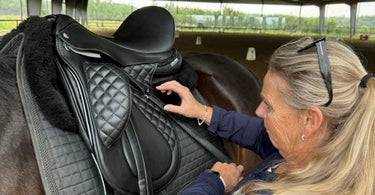
Professional saddle fitting in Florida starts with recognizing the warning signs. An ill-fitting saddle causes discomfort, resistance, poor performance, and long-term back damage.
The most common signs include:
- White hairs appearing on the withers or loin area
- Dry spots under the saddle after riding
- Horse pins ears or swishes tail when saddled
- Reluctance to move forward or hollow back
- Saddle slides side to side during riding
- Horse develops girthiness or cinchiness
American Association of Equine Practitioners on saddle fit and back health notes that poor saddle fit contributes to back pain and performance issues in sport horses.
Saddle Fitting Cost and How to Measure Your Horse
Saddle fitting cost varies by whether you need a consultation, adjustment, or full reflocking. A professional assessment checks the saddle tree, gullet width, panel flocking, and wither clearance.
To measure your horse, you'll need a flexible tape or wire, a helper, and a flat surface for the wither template.
Measure from the wither down behind the shoulder blade for gullet width, then check spinal alignment and pressure distribution, uneven pressure causes muscle atrophy.
Measurement |
What It Tells You |
Common Problem |
|---|---|---|
Wither tracing |
Gullet width needed |
Saddle sits too low |
Back length |
Saddle size limits |
Panels extend past last rib |
Shoulder angle |
Tree fit |
Restricted shoulder freedom |
Spinal clearance |
Channel width |
Pressure on spine |
A good fit in the barn aisle often changes once the horse moves, which is why on-site evaluation matters.
MacRider Dressage Saddles for Professional Saddle Fitting
For riders needing a saddle that supports horse and rider through demanding work, MacRider offers dressage saddles built for proper fit and stability.
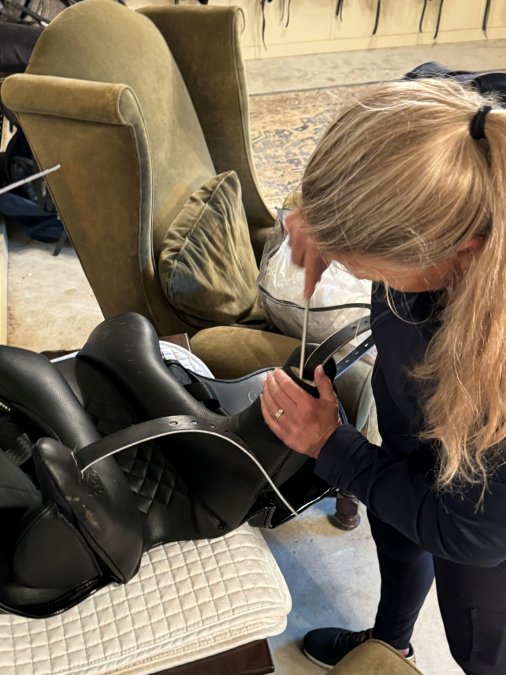
The Arlando ($5,445.00) provides a balanced seat for riders working through the levels, while the Burlington ($5,145.00) suits horses with wider withers. The Destiny ($5,545.00) combines updated design with proven fit principles. Investing in these models ensures a secure foundation for your training, much like maintaining other essential horse equipment that supports long-term performance and comfort in the stable.
Each saddle is designed with attention to gullet width, panel flocking, and billet alignment, and we offer saddle fitting and trial services so you can confirm the fit before committing.
United States Equestrian Federation on proper equipment for competition emphasizes that correctly fitted tack supports horse welfare and performance.
The Utopia ($5,845.00) and The Legend ($6,145.00) are our top-tier options for serious competitors, while the Regent ($5,695.00), Challenge ($5,745.00), Ruby ($5,595.00), 4th Level ($5,345.00), and Olympic ($5,345.00) cover different confirmation types and rider preferences.
Frequently Asked Questions
How much does saddle fitting cost?
Saddle fitting cost varies by provider and service type. On-site consultations, virtual sessions, and reflocking adjustments each carry different fees, and some fitters include a fitting with a saddle purchase. MacRider offers professional saddle fitting and trial services from its Wellington, Florida facilities. Contact MacRider directly for current pricing on fitting appointments and saddle trials.
What are the signs a saddle does not fit correctly?
Common signs a saddle does not fit include dry spots under the panels after riding, uneven sweat marks, wither pressure, reduced shoulder freedom, and behavioral changes like pinned ears, bucking, or refusing to move forward. A professional saddle fitting evaluation checks gullet width, tree angle, panel flocking, and spinal alignment. If you notice any of these signs, schedule an assessment with an independent saddle fitter or brand representative.
How do I measure a horse for a saddle?
To measure a horse for a saddle, first locate the lowest point of the back behind the shoulder blade. Use a flexible measuring tape or wire to trace the wither profile and the curve of the back. Measure gullet width at the front of the tree and the angle of the shoulder. A professional saddle fitter can confirm these measurements and check tree width, panel flocking, and billet alignment before you buy.
Finding the right saddle shouldn't feel like guesswork. MacRider provides professional saddle fitting services, a curated selection of dressage saddles, and trial options so you can make an informed choice. Our Wellington facility offers expert guidance, and our team helps match horse and rider with equipment built for comfort and performance. Get started with MacRider and ride in a saddle that actually fits.