

Table of Contents
- How to Tell If a Saddle Fits a Horse: 8 Behavioral Signs to Watch
- Saddle Too Narrow for Horse vs. Saddle Too Wide for Horse
- Your Saddle Fitting Checklist: What to Document Before Calling a Professional
- Frequently Asked Questions
Last Updated: October 13, 2026
How to Tell If a Saddle Fits a Horse: 8 Behavioral Signs to Watch
A horse that pins its ears, tosses its head, or refuses to move forward when you saddle up is often telling you the saddle does not fit. Here are the 8 behavioral signs, how to tell narrow from wide, and what to document before calling a professional.
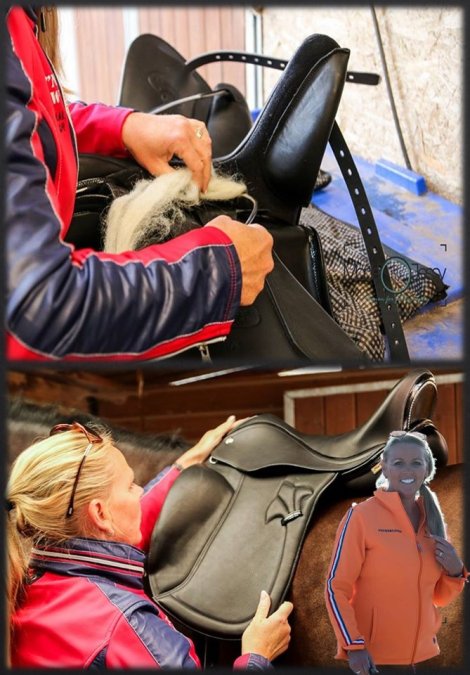
Watch for ears pinned during saddling or girthing, head tossing when you mount, tail swishing that is not about flies, pawing when you tighten the girth, biting or kicking toward the saddle area, girthiness, bucking or rearing on the first strides, and reluctance to move forward. A horse that was calm last season and is now explosive usually has a physical cause, and saddle fit sits near the top of the list. According to the American Association of Equine Practitioners' owner resources, back pain and poor tack fit are common reasons horses show resistance under saddle.
Saddle Too Narrow for Horse vs. Saddle Too Wide for Horse
A narrow saddle pinches the withers and shoulders; a wide saddle rocks and drops onto the spine.
Too narrow sits high at the front and digs into the withers, causing dry spots under the front panels, white hairs or rubbed patches at the withers, head tossing, a shortened stride, and resistance to bending.
Too wide sits low at the front and rocks side to side, and the gullet can drop onto the spine, causing slipping, a dipping sore back, bucking on the first strides, and a dry strip along the spine.
Your Saddle Fitting Checklist: What to Document Before Calling a Professional
Work through this checklist on a calm day and write down what you find:
- Saddle position: behind the shoulder blade, not on it
- Gullet clearance: at least four fingers between gullet and spine
- Panel contact: even pressure, no bridging or rocking
- Wither clearance: no contact at the front of the gullet
- Sweat patterns: even marks, no dry spots
- Back check: heat, swelling, or flinching along the spine
- Behavior log: ears, head, tail, and girth reaction for one week
- Photos: side view, front view, and a written summary
Two things matter most: check the back after removing the saddle, since heat, swelling, or a flinch tells you more than any single behavior; and note whether signs are new or built up slowly. Gather photos, your behavior log, and back-check notes so a fitter sees the pattern, not just one bad day. Rule out other causes first: teeth, feet, ulcers, and training produce similar signs, so let your vet check those while a fitter assesses the saddle.
The fix is not always a new saddle: many quality saddles, including ours, use an adjustable carbon fiber tree and 100% pure wool-flocked panels a fitter can rebalance, often correcting a narrow or wide fit without starting over. If you need a new saddle, match it to your horse's back. The Arlando (Gen 2) suits normal-withered horses with a curved back and true short-backed horses. The Challenge Triple Star fits a medium-to-high wither and standard back. High-withered horses with big shoulders do best in the Burlington, with an open pommel for shoulder freedom.


A saddle that does not fit will keep showing the same signs, no matter how much you work on training. If your horse pins its ears, tosses its head, or flinches at the girth, the answer is usually in the tack, not the horse. MacRider builds saddles with adjustable carbon fiber trees, pure wool-flocked panels, and at least four fingers of spinal clearance, and our team offers expert saddle fitting and trials. Get started with MacRider and ride in a saddle that fits from the first stride.
Frequently Asked Questions
What is the 3-finger rule for saddle fit?
The 3-finger rule checks wither clearance: you should fit two to three fingers between the pommel and your horse's withers. If you can't fit any fingers, the saddle is too narrow. If four or more fingers fit easily, it's too wide. This quick test reveals gullet width, but it doesn't replace a full saddle fitting checklist that includes panel contact and balance.
Can a poorly fitting saddle cause behavioral problems?
Yes. A saddle that pinches or bridges creates pressure points that horses respond to with pinned ears, tail swishing, bucking, or refusal to move forward. These signs a saddle does not fit often appear gradually, so riders mistake them for attitude problems. If behavior changes only under saddle and improves on the ground, saddle fit deserves a close look before you blame training.
Should a saddle leave dry spots or pressure marks?
No. After a ride, your horse's back should show even sweat patterns. Dry spots under the panels mean the saddle isn't making contact there, concentrating pressure on the surrounding areas. White hairs, welts, or sore spots after removing the saddle are physical signs of poor saddle fit. Document these with photos before contacting a professional saddle fitter.