
Last Updated: November 13, 2026
Quick Summary
The 3-finger rule for saddle fit is a quick wither clearance check: you slide two to three fingers under the pommel to see if the saddle tree clears the horse's spine. It is a screening test, not a fitting, so treat it as a first question rather than the final answer.
- Check three spots: under the pommel at the highest wither point, then the left and right sides.
- Girth to riding tightness before checking, because a loose saddle reads as extra clearance.
- Less than two fingers means too narrow or sitting low, so stop riding and get a fitter.
- Recheck after walking ten steps, since movement can close or open the clearance you measured.
- Measure your own two-finger width so you can compare counts between different hands.
Table of Contents
- What the 3-Finger Rule for Saddle Fit Actually Measures
- How to Run the Finger Clearance Check at Home, Step by Step
- Why the Rule Shifts With Horse Anatomy and Your Hand Size
- Signs a Saddle Does Not Fit That Finger Clearance Cannot Catch
- Where the English Saddle Fitting Chart Agrees and Falls Short
- How to Fit a Saddle to a Rider Without Losing the Horse's Clearance
- Saddle Fitting Guide Western: Where the Finger Test Changes
- Book a MacRider Fitting Before Your Next Show Season
- Frequently Asked Questions
What the 3-Finger Rule for Saddle Fit Actually Measures
The 3-finger rule for saddle fit is a quick check of wither clearance: you slide two to three fingers under the pommel to see if the saddle tree clears the horse's spine. It is a screening test, not a fitting. It is best treated as the first question in a longer conversation, never the final answer.
Here is what the check measures and what it ignores:
- Measures: vertical space between the gullet and the top of the withers
- Measures: whether the tree points sit off the shoulder blades
- Ignores: contact along the panels under a rider
- Ignores: balance front to back
- Ignores: how the saddle moves at the trot and canter
A saddle can pass the finger test and still pinch, rock, or slip.
Where the Fingers Go: Pommel, Withers, and Gullet Channel
Place the horse on level ground and stand at its left side. Slide your fingers under the front of the pommel, palm down, until your fingertips reach the top of the withers. You are feeling the space inside the gullet channel, the tunnel that runs front to back over the spine.
Check three spots:
- Directly under the pommel at the highest point of the withers
- Along the left side of the withers, following the tree point
- Along the right side, matching the left
Keep your hand relaxed. Pressing up lifts the saddle and fakes clearance.
How to Run the Finger Clearance Check at Home, Step by Step
The at-home check takes about two minutes and needs no tools beyond level ground, the pad you actually ride in, and a helper to watch the horse while you feel. Do it in the same spot, on the same surface, at the same point in your ride each time, because a horse standing on a slope or fresh off a workout will read differently.
Set up the horse and saddle
- Stand the horse square on level ground and let it relax its head and neck. A horse braced against the cross-ties or parked with one hind leg forward will change the shape of its back.
- Place the saddle on the pad you ride in, centered front to back, with the tree points sitting behind the shoulder blades, not on them.
- Girth to riding tightness, the same tension you use before you mount. Snug enough that you cannot slide a flat hand under the girth, not so tight that the horse pins its ears.
- Let the horse stand for a minute so the pad settles, then recheck the girth. Flocking and pads compress.
Place your fingers
- Stand at the left shoulder, facing the horse's neck, and keep your shoulders relaxed.
- Slide two fingers flat, palm down, under the front of the pommel until your fingertips reach the top of the withers. You are feeling the space inside the gullet channel, the tunnel that runs front to back over the spine.
- Check three spots in order: directly under the pommel at the highest point of the withers, along the left side of the withers following the tree point, and along the right side matching the left.
- Note the count at each spot separately. A saddle that reads three fingers at the top and one finger on the left side is a different problem than one that reads two everywhere.
Confirm it holds
- Walk the horse forward ten steps and check again. Movement changes muscle tension and can close or open the clearance you just measured.
- Have your helper watch the saddle from the side while you lead the horse. Look for the pommel lifting, the cantle dropping, or the whole saddle sliding toward one shoulder.
- Record the count, the date, the pad used, and which side read lowest. A written log turns a one-time guess into a trend you can compare across seasons.
Watch out: checking with the girth loose is the most common mistake. A loose saddle rides up and reads as more clearance than the horse actually has, and a saddle checked only at the pommel can hide a tree point pressing on one shoulder.
Reading the Count: Two to Three Fingers, Three to Four, Three to Five
Most fitting guides land on two to three fingers as a general guideline for an English saddle, with three to four or three to five fingers quoted for wider trees and bigger withers. The number is a range, not a target. Your hand size decides which end of it you land on.
What You Feel |
Likely Meaning |
Next Step |
|---|---|---|
Less than two fingers |
Too narrow or sitting low |
Stop riding, get a fitter |
Two to three fingers |
Typical clearance range |
Confirm under saddle |
Three to five fingers |
Generous clearance |
Check for rocking and side contact |
Contact on one side only |
Tree point pressure |
Have the tree checked |
Same count standing and walking |
Clearance is stable |
Still confirm under a rider |
Count drops after ten steps |
Muscle or pad shifting |
Recheck girth and pad placement |
Why the Rule Shifts With Horse Anatomy and Your Hand Size
Two riders can check the same saddle and get different counts. That is not a flaw in the method, it is the method telling you it is rough. The three-finger rule is a relative screen, not a universal measurement, and four variables move the number before the saddle ever changes.
Hand size and finger width
Finger width varies widely between adults.
Wither shape
A high, narrow wither rises closer to the gullet, so it needs more vertical space before the tree ever touches down.
Back profile and muscling
Curved backs and flat backs load the panels differently.
Posture and the moment of measurement
A horse braced against cross-ties, parked on a slope, or standing with one hind leg forward will change the shape of its back.
Because of this, compare counts on your own horse over time rather than against a universal number.
Signs a Saddle Does Not Fit That Finger Clearance Cannot Catch
Plenty of poorly fitting saddles pass the finger test. Clearance at the withers says nothing about pressure further back, and that is where most problems hide.
Look for these signs a saddle does not fit:
- White hairs or dry patches under the panels
- Sore spots after grooming
- Hollowing the back when the saddle appears
- Refusing to stand still for saddling
- Shortened stride or a stiff trot
- Saddle slipping to one side
- Rider pitched forward or tipped back
A common mistake is blaming behavior on attitude when the saddle is the cause.
Finger clearance is one data point. What a professional fitting actually checks goes well beyond it, including panel contact, tree angle, and balance under a rider.
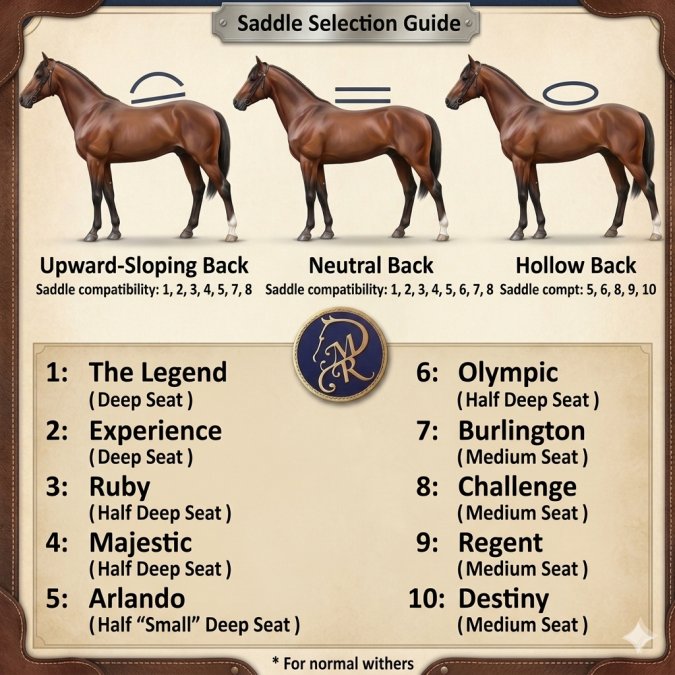
Where the English Saddle Fitting Chart Agrees and Falls Short
An English saddle fitting chart is a useful starting point and a poor finish line.
Where charts agree with the finger test: both treat wither clearance as a basic requirement. Where they fall short: a chart cannot feel contact, and it cannot see how the saddle behaves when the horse moves.
Use the chart to shortlist. Use your hands and eyes to confirm. Then ride.
How to Fit a Saddle to a Rider Without Losing the Horse's Clearance
Fitting the rider often pulls the saddle out of balance for the horse. A rider who needs a larger seat or a more forward flap can end up in a saddle that sits differently on the back.
Start with the horse's clearance, then adjust the rider's position through flap size, block placement, and seat depth.
The case for a custom saddle explains when made-to-measure beats off-the-rack.
Saddle Fitting Guide Western: Where the Finger Test Changes
Western saddles use the same idea with different landmarks. Instead of checking under a pommel, you check clearance under the gullet and along the bars, and you watch how the skirt sits over the shoulders.
A western saddle typically carries more surface area and a wider gullet channel. The finger count still works as a rough screen, but the bar angle and the rock of the bars matter more than the number. Feel for even contact along both bars and no bridging in the middle.
Book a MacRider Fitting Before Your Next Show Season
A saddle that felt fine earlier in the year can sit differently as your horse's fitness changes.
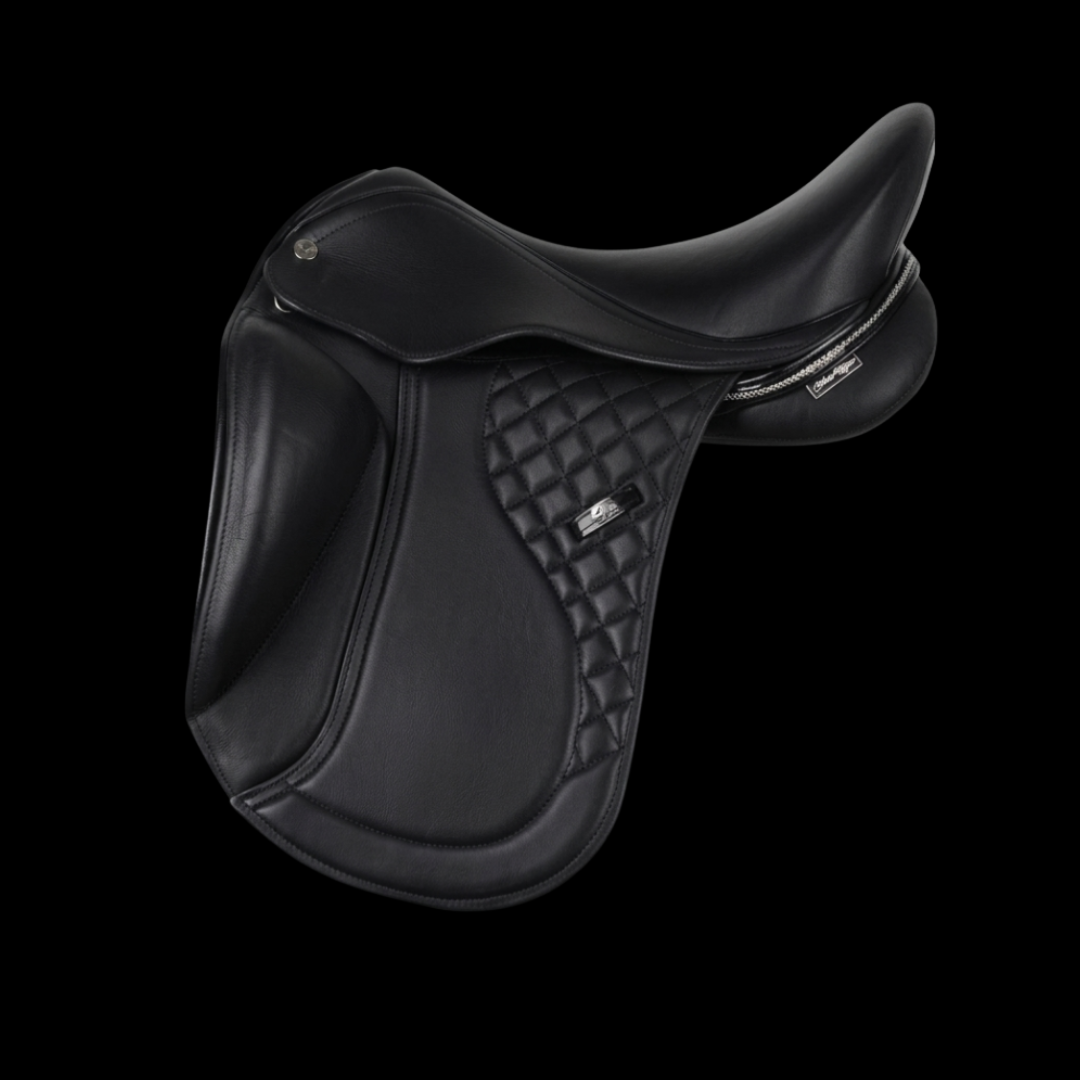
MacRider offers saddles for dressage and jumping, and the saddles in our line use an adjustable carbon fiber tree and a gullet with at least four fingers of spinal clearance.
If you are weighing a purchase, see what a professional fitting involves and check realistic pricing before you commit. You can also browse the Challenge Triple Star to start the conversation.
Clearance at the withers is the cheapest check you can run and the easiest to misread. Get the count right, then get eyes on the parts your fingers cannot reach.
Frequently Asked Questions
How many fingers should fit between a saddle and a horse's withers?
Most fitters look for two to three fingers of vertical clearance at the top of the withers, measured with the saddle placed correctly and no rider aboard. Some guides say three to four, and a few say three to five, which is why the count alone settles nothing. Check the same spot on both sides of the withers, then look down the gullet channel to confirm the spine is clear along its length. A count inside the range still fails if the saddle rocks, bridges, or pinches.
Can a saddle look like it fits but still cause pressure points?
Yes, and this is the rule's biggest blind spot. A saddle can show perfect finger clearance while standing and still concentrate load once a rider settles into it. Watch for a tree that is too narrow at the points, panels that bridge over the back, or a rear that lifts under posting and sitting trot. Signs a saddle does not fit often show up as dry spots under the panel after work, white hairs, flinching at girthing, or a horse that hollows when you mount. Recheck with the rider up and the horse moving.
What gullet size fits most horses?
There is no single gullet size that fits most horses, and any chart that promises one is oversimplifying. Width depends on the horse's breed, age, muscling, and back shape, and a horse can change width with fitness across a season. Use finger clearance as a screening check, then confirm with a qualified saddle fitter who can measure tree width and check panel contact. A saddle with a generous gullet channel, like the MacRider line at four fingers wide, gives spinal clearance but still needs the right tree width for that individual horse.
How do you fit a saddle to a rider as well as the horse?
Start with the horse, then size the rider. Seat size should let you sit with a flat, balanced pelvis and roughly a hand's width behind you and in front of the pommel. Your knee should rest behind the flap's front edge without hanging over it, and your leg should fall in a straight line to the stirrup. Check that the deepest part of the seat keeps you centered rather than tipped back or pitched forward. A saddle that fits the horse but fights the rider's position will create pressure the horse feels within a few rides.
