
Table of Contents
- What Drives the Price of a Professional Jumping Saddle
- New vs. Used Jumping Saddles: A Real Price Comparison
- Close Contact vs. Monoflap vs. Double Flap Design
- Factors Affecting Jumping Saddle Pricing Beyond the Label
- What Saddle Fitting Service Costs Really Add Up To
- Total Cost of Ownership: The Number Most Buyers Miss
- How to Choose the Right Jumping Saddle for Your Budget
- Frequently Asked Questions
Last Updated: September 25, 2026
What Drives the Price of a Professional Jumping Saddle
Understanding how much professional jumping saddles cost starts with the materials and construction methods that separate competition-grade tack from entry-level equipment. Leather quality, tree construction, and panel configuration account for the largest price differences between budget and professional models.
Leather Quality and Construction Method
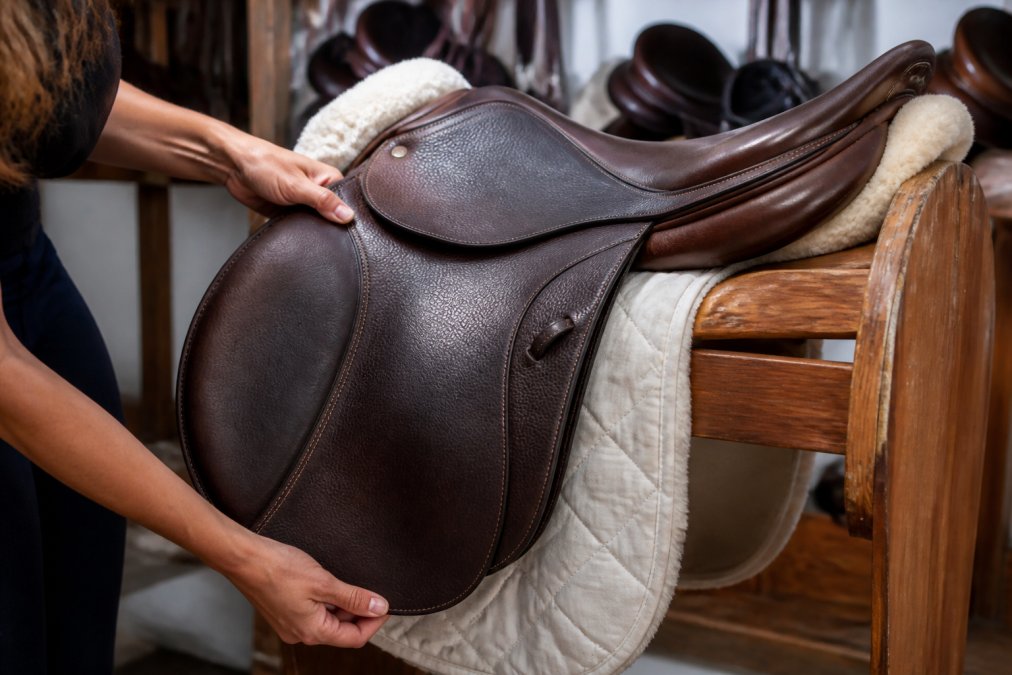
Full grain leather is the outermost layer of the hide, retaining the natural grain and maximum durability. Saddles built with it hold up to daily training and resist cracking longer than corrected grain alternatives. The stitching method matters too: hand-stitched panels and seams outlast machine stitching, which is why bespoke makers charge more for the labor involved.
Tree Width, Gullet, and Panel Configuration
Tree width and gullet size determine how the saddle sits on the horse's back. A wider gullet suits broader-shouldered horses; a narrower one fits finer builds. Panel configuration, whether wool-flocked or foam, affects pressure distribution across the back. Wool flocking can be adjusted over time by a fitter, while foam panels are fixed. That adjustability is one reason wool-flocked saddles often command higher prices.
New vs. Used Jumping Saddles: A Real Price Comparison
The gap between new and used pricing depends heavily on condition, age, brand reputation, and whether the saddle has been refurbished. Certified pre-owned saddles from reputable sellers typically cost meaningfully less than new equivalents while still offering years of service, but the size of that discount varies enormously by tier.
| Category | Typical Price Position | Key Trade-off |
|---|---|---|
| New bespoke | Highest | Perfect fit, full warranty, longest lead time |
| New off-the-rack | Mid-to-high | Immediate availability, limited customization |
| Certified pre-owned | Moderate | Inspected and refurbished, shorter warranty |
| Used private sale | Lowest | No inspection, no warranty, fit risk |
What the Tiers Actually Look Like in Dollars
Rather than quote a single number, it helps to think in tiers. Entry-level close contact saddles built for amateur riders sit at the bottom of the professional range. Mid-tier off-the-rack saddles from established makers occupy the middle. Top-tier bespoke saddles from the most respected European workshops sit at the top, and a fully customized order with upgraded leather and a custom tree can exceed the base price of the same model by a wide margin.
Depreciation Curves: How Fast Value Drops
Jumping saddles depreciate fastest in the first one to three years, then the curve flattens. A common pattern is that a new saddle loses a meaningful share of its retail value the moment it leaves the shop, then continues to slide through the first few years of regular use before stabilizing. After that point, well-maintained saddles from strong brands tend to hold value for years, with only slow erosion tied to condition and fashion.
Several factors bend the curve:
- Brand reputation. Workshops with long-standing competition reputations retain value better than newer or less-known makers.
- Leather condition. Full grain leather that has been cleaned and conditioned regularly resists cracking and holds value far better than neglected hides.
- Tree and panel history. A saddle that has been reflocked or had its tree adjusted carries a different fit profile and a different resale story than a factory-original one.
- Original documentation. Receipts, fitter records, and proof of service history all support a higher resale price.
How to Decide Between New and Used
Buy new if you need a specific tree width, flap length, or panel configuration that off-the-rack saddles cannot provide, or if you want the full manufacturer warranty. Buy certified pre-owned if you want a known brand at a lower entry point and are willing to accept a shorter warranty. Buy from a private seller only if you can arrange a trial period and have the saddle inspected by an independent fitter before money changes hands.
Close Contact vs. Monoflap vs. Double Flap Design
Design choice affects both price and ride feel. Close contact saddles minimize material between rider and horse, giving direct feedback over fences. Monoflap designs use a single flap covering the stirrup bars, reducing bulk and improving leg contact. Double flap saddles, with two layers of leather, offer more traditional structure and durability.
Factors Affecting Jumping Saddle Pricing Beyond the Label
Several costs sit outside the saddle itself, and most buyers underestimate them. Custom fit adjustments, shipping, and fitting consultations add up quickly.
Hidden Fees in Customization and Bespoke Orders
Bespoke orders often carry charges that aren't in the base quote. Common additions include custom flap length, upgraded leather, monogrammed name plates, and expedited production. A saddle quoted at one price can climb substantially once these options are added. Always ask for a full itemized quote before committing.
Depreciation Curves and Resale Value
Jumping saddles depreciate fastest in the first few years, then level off. Well-maintained full grain leather saddles from established makers hold value better than entry-level models. French and German makers with strong reputations tend to retain resale value longer. Buyers who plan to upgrade should factor resale into their decision.
What Saddle Fitting Service Costs Really Add Up To
Professional saddle fitting is not a one-time expense. Horses change shape with fitness, age, and season, so most competitive riders schedule fittings at least once or twice a year. Each session carries its own fee, and reflocking or adjustment work adds more.
Total Cost of Ownership: The Number Most Buyers Miss
The purchase price is only part of what a jumping saddle costs over its life. Most buyers focus on the sticker price and never add up the recurring costs that follow the saddle home. Over several years, those costs can approach a meaningful share of the original price, and for riders who compete seriously, they can exceed it.
The Recurring Costs, Line by Line
Professional fitting sessions. Horses change shape with fitness, age, and season. Most competitive riders schedule a fitting at least once or twice a year. Each session carries its own fee, and if the fitter travels to your barn, a travel charge is often added on top.
Why TCO Changes the Buy Decision
A slightly more expensive saddle that needs less frequent adjustment and holds its value can cost less over time than a cheaper one that requires constant work. The math favors:
- Saddles with adjustable wool flocking over fixed foam panels, because the fit can be maintained rather than replaced.
- Brands with strong resale reputations, because the exit price offsets the entry price.
- Full grain leather over corrected grain, because it survives years of cleaning and conditioning without cracking.
A Simple Way to Budget
Before you commit, write down the purchase price, then add a realistic annual figure for fitting, reflocking, leather care, and repairs. Multiply that by the number of years you expect to keep the saddle. Subtract the resale value you expect at the end. The result is the true cost of ownership, and it is often the number that should drive the decision, not the price on the tag.
How to Choose the Right Jumping Saddle for Your Budget
Start with fit, not price. A saddle that doesn't fit your horse will cause discomfort and performance problems regardless of what you paid. Work with a professional fitter to establish your horse's tree width and panel needs first.
- Confirm your horse's tree width and gullet size with a fitter
- Set a total budget including fitting and maintenance costs
- Decide between new, certified pre-owned, or bespoke
- Ask for an itemized quote covering all customization fees
- Confirm trial period and return terms before purchase
Frequently Asked Questions
What is the average cost of a professional jumping saddle?
Professional jumping saddles generally fall into three tiers: entry-level off-the-shelf models, mid-range branded saddles, and bespoke custom builds. Each tier reflects differences in full grain leather, tree construction, panel configuration, and whether the saddle is fitted to a specific horse. Because pricing depends on materials, customization level, and the fitter's assessment, MacRider recommends requesting a current quote rather than relying on generic averages, since two saddles in the same category can differ by hundreds of dollars based on options alone.
How much does a custom-fitted jumping saddle cost compared to off-the-shelf models?
Custom-fitted jumping saddles cost more than off-the-shelf models because they include measurements for tree width, gullet size, seat depth, knee rolls, and thigh blocks tailored to both horse and rider. The premium covers the fitting consultation, bespoke panel configuration, and often a trial period. Off-the-shelf saddles cost less upfront but may require flocking adjustments or a reflocking service later, which adds to the total. Riders with asymmetrical horses or unusual conformations usually find the custom route saves money over repeated off-the-shelf swaps.
Do professional jumping saddle prices include fitting services?
Most saddle prices do not include professional saddle fitting. Fitting is typically billed separately as a consultation fee, and costs vary by region, whether the fitter travels to your barn, and how many adjustments are needed. Some retailers bundle a first fitting with a new saddle purchase, while others charge for every visit. Always confirm what is included before ordering, and ask whether follow-up flocking adjustments after the break-in period carry an additional charge.
Are pre-owned professional jumping saddles a cost-effective alternative?
Certified pre-owned and refurbished jumping saddles can offer significant savings compared to new models, especially for well-known brands with strong resale value. The trade-offs are wear on billet straps, stretched leather, and panels that may need reflocking. A pre-owned saddle with a documented service history and a trial period is usually a safer purchase than one sold as-is. If the tree is sound and the panel configuration still suits your horse, pre-owned can deliver professional-grade performance at a lower entry point.
Professional jumping saddles cost what they do because of materials, craftsmanship, and the ongoing service they require. Getting the fit right matters more than the label. MacRider offers a curated selection of saddles and bridles for jumping and dressage, backed by expert saddle fitting and trial services, plus customizable options like name plates. Get started with MacRider and find equipment built for your horse's comfort and your competitive goals.