

Table of Contents
- Dressage Saddle Seat Size and Rider Comfort
- Dressage Saddle Fit for Horse: Withers, Back Shape, and Panels
- How to Measure for a Dressage Saddle
- Dressage Saddle Design: Flaps, Blocks, and Tree Construction
- How Dressage Saddle Fit Changes Over Time
- Used Dressage Saddles, Budget, and Total Cost
- Common Dressage Saddle Fit Problems and Warning Signs
- The Trial and Fitting Process
- Saddle Materials, Care, and Longevity
- Frequently Asked Questions
Last Updated: October 18, 2026
Dressage Saddle Seat Size and Rider Comfort
Choosing a dressage saddle starts with the seat: size, depth, and shape decide whether you sit balanced or fight the saddle every ride. Seat size runs from pommel rivet to cantle center; most adults land between 17" and 18", but pelvic width and leg length matter more than height. A deep seat locks you in for sitting trot, a half-deep seat frees the rising trot, and sizing up to feel secure is a common mistake: too large a seat lets you slide behind the motion.
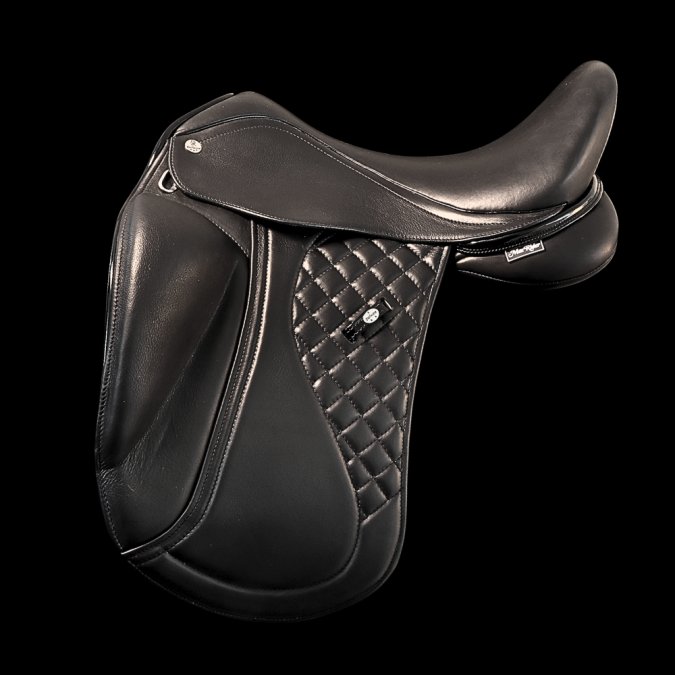
Dressage Saddle Fit for Horse: Withers, Back Shape, and Panels
Horse fit comes down to three checks: withers clearance, back profile, and panel contact. Start with at least four fingers of clearance under the gullet and a tree wide enough that panels sit flat rather than pinching.
Our own line is built around this: the Arlando suits normal-withered, curved-back horses and is optimized for very short-backed horses, while the Burlington uses an open pommel for high withers and large shoulders.

How to Measure for a Dressage Saddle
Measuring for a dressage saddle takes two passes: one for the rider, one for the horse. Measure seat size on a hard bench from the back of your seat bone to your knee, check thigh length against flap size (a standard 16" flap suits most riders), trace the wither and back with a flexible curve, confirm four fingers of gullet clearance with the saddle girthed, then sit and check that ear, shoulder, hip, and heel line up without pushing against the pommel.
Measurement |
What It Decides |
Typical Range |
|---|---|---|
Seat size |
Rider stability and pelvic room |
17" to 18" |
Flap length |
Knee block position |
Standard 16" |
Gullet width |
Wither and spinal clearance |
4+ fingers |
Dressage Saddle Design: Flaps, Blocks, and Tree Construction
Design details are where two saddles with the same seat size feel completely different. Mono-flap designs remove bulk between your leg and the horse, outside blocks give external leg stability, and inside Velcro blocks let you move support to match your leg position. Carbon fiber trees adjust on the spot when a horse changes shape, and wool-flocked panels can be re-flocked as back muscles develop; foam panels generally cannot.
How Dressage Saddle Fit Changes Over Time
A saddle that fits in spring may not fit in fall. Young horses building topline muscle widen across the back, older horses losing muscle behind the wither can develop bridging, and seasonal weight shifts do the same on a smaller scale. Re-check wither clearance every few months, watch for white hairs, dry patches, or flinching at the girth, and have a fitter re-flock or adjust the tree when the profile changes.
Used Dressage Saddles, Budget, and Total Cost
Buying used is a legitimate route, provided you know what you are inspecting. Sight down the tree for symmetry, press along both panels for hard spots, check the gullet channel against your horse's spine, inspect the billets for cracking, and confirm the flap and block setup matches your leg length. Budget for re-flocking, tree adjustment, and fitting appointments, since a cheap saddle needing a full rebuild rarely stays cheap.
Common Dressage Saddle Fit Problems and Warning Signs
Most fit problems announce themselves before they become lameness. Watch for bridging (light under the middle of the panel), rocking on a flat back, wither pressure, shoulder restriction, slipping, and rider instability from a seat too large or too deep. Behavior counts too: a horse that pins its ears at saddling or moves off stiff on one side is telling you something.
The Trial and Fitting Process
Fit is confirmed in motion, not on the rack. Check wither clearance, panel contact, and gullet width statically, then with the rider mounted confirm balance and that the saddle does not lift at the cantle. Watch stride length and willingness to stretch down at walk and trot, check for slipping and shoulder freedom at canter and lateral work, then review dry patches and sweat patterns after the ride.
Saddle Materials, Care, and Longevity
Leather and panel material decide how long a saddle holds its fit. Premium Italian leather breaks in without stretching out of shape, and wool flocking can be adjusted as the horse changes. Wipe down after every ride, clean and condition leather monthly, keep the saddle covered and off direct heat, have flocking checked annually, and store with the panels supported.
Frequently Asked Questions
What is the most comfortable dressage saddle?
Comfort depends on matching seat shape and depth to your body, so there is no single answer. A deep seat with a supportive cantle suits riders who want security, while a half-deep seat allows more movement. Rider experience, pelvic width, and leg length all change what feels comfortable. Try several seats on your own horse before deciding, and use a trial period so you can ride in the saddle rather than judge it from a showroom stool.
What is the 3-finger rule for saddle fit?
The 3-finger rule is a quick check of withers clearance and gullet width. With the saddle placed without a pad, you should be able to fit roughly three to four fingers under the pommel and along the gullet without pressure on the spine. It is a starting point, not a full fit assessment. Panel contact, saddle balance, and how the saddle sits when you are mounted still need checking by eye and by feel.
How do I measure what size dressage saddle I need?
Seat size is measured in inches from the pommel nail to the center of the cantle, and most riders land between 17 and 18 inches. Measure your thigh length and check that the flap length and angle let your leg hang in a long dressage position without your knee passing the flap edge. Sit in the saddle if you can, because seat size numbers vary between makers and a 17.5-inch seat is not identical across brands.